WireGuard vs OpenVPN vs VLESS+Reality: which protocol to choose
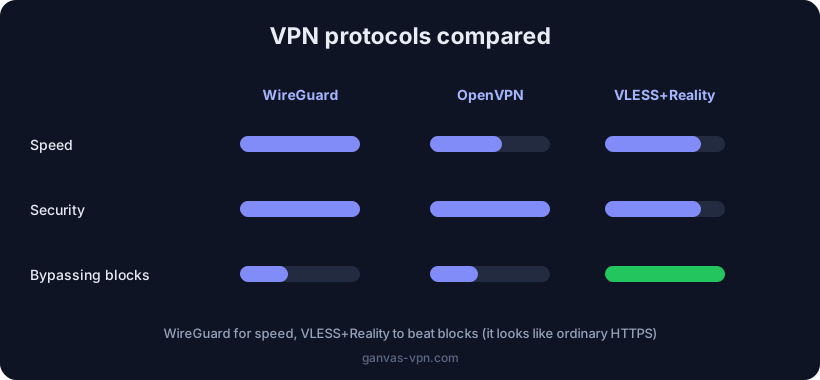
The protocol is the “engine” of a VPN: it decides exactly how your traffic is encrypted and carried. It affects speed, battery life, and whether your connection makes it through filtering. Three protocols dominate today: WireGuard, OpenVPN, and the VLESS+Reality combo. Let’s see how they differ.
WireGuard — speed and simplicity
WireGuard is a modern protocol with a compact codebase and fast encryption. Its main strengths:
- High speed and low latency — noticeably faster than older protocols.
- Battery savings on phones and laptops.
- Fast reconnection when your network changes (Wi-Fi → mobile data).
It has one drawback, but an important one: WireGuard traffic has a recognizable fingerprint. On networks without heavy DPI it’s a great default, but where blocking happens by signature, it may not get through.
OpenVPN — the proven classic
OpenVPN has been around for years and is well understood. It’s flexible, can run over TCP (which helps it slip through restrictive firewalls), and is supported almost everywhere.
- Reliability and compatibility — works on nearly any device.
- TCP/443 mode disguises as ordinary HTTPS better than UDP protocols.
- Downside — heavier and slower than WireGuard, and modern DPI still often recognizes its VPN fingerprint.
VLESS+Reality — for bypassing blocks
This isn’t “just another VPN” but an approach for networks with active filtering. VLESS is a lightweight transport, and Reality on top of it imitates a real TLS handshake to a popular website.
- Disguise as ordinary HTTPS — to DPI it looks like a visit to a major site, not a VPN.
- Resilience to blocks where WireGuard and OpenVPN get cut.
- Downside — harder to configure by hand; speed depends on the server.
For more on how DPI recognizes traffic, see our article on bypassing blocks in 2026.
So which should you pick
- Normal network, want speed → WireGuard.
- Old device or strict firewall → OpenVPN over TCP.
- Heavy blocking and DPI → VLESS+Reality.
In practice it’s convenient when the app picks the protocol for your network so you don’t touch configs. Once connected, make sure there are no leaks — easy to check with our VPN check.
GANVAS VPN supports WireGuard, VLESS+Reality, and a built-in Tor mode — switch between them in a couple of clicks.
Try GANVAS VPN — fast servers, modern protocols and DNS-leak protection.