Tor vs VPN: the difference and which is more private
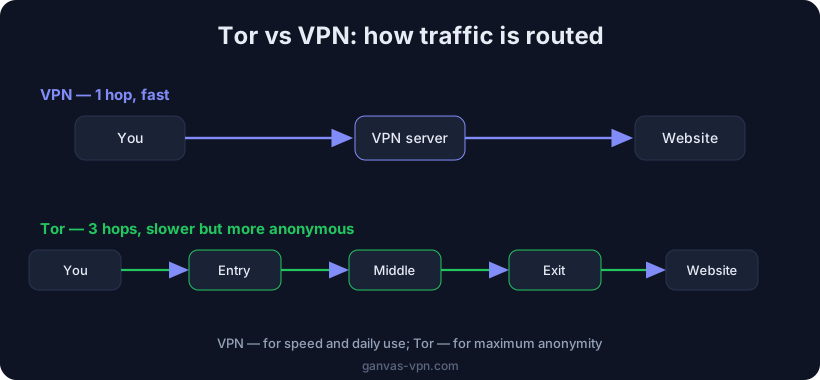
Tor and VPNs often get lumped together as if they were the same thing. In reality they’re different tools with different logic. A VPN builds a single encrypted tunnel to a server you pick, while Tor bounces your traffic through a chain of several relays run by different people around the world. Let’s break down which is more private and when to use each.
How they work
- VPN. Your device connects to one VPN server. Your provider only sees the VPN connection, and websites see the server’s IP. One hop — high speed.
- Tor. Traffic passes through three random relays (entry, middle, exit). No single relay knows both who you are and where you’re going. Several hops — strong anonymity, but slow.
Roughly speaking, a VPN is about privacy and speed, while Tor is about anonymity. A VPN trusts one provider; Tor spreads trust across several independent relays.
Which is more private
For anonymity, Tor is stronger: even if one relay is compromised, it can’t see the full picture. But Tor has downsides — it’s noticeably slower, many sites block exit nodes, and your provider can sometimes see that you’re using Tor at all (unless you use bridges).
A VPN is faster and more convenient for everyday tasks: streaming, public Wi-Fi, bypassing regional restrictions. But here you trust the provider, so it’s important to pick a no-logs service with leak protection. You can check whether your real address is exposed with our VPN check, and look specifically at browser leaks with the WebRTC test.
When to use which
- VPN only — for speed, streaming, protection in cafes and airports, everyday privacy.
- Tor only — when you need maximum anonymity and speed isn’t critical.
- VPN + Tor together — VPN first, then Tor: your provider can’t see you’re using Tor, and the Tor entry node can’t see your real IP.
That last scenario is often what you actually want, but setting it up by hand is fiddly. That’s why GANVAS VPN has a built-in Tor mode: one toggle routes all your traffic through the VPN and then through the Tor network — no separate browser install, no manual config wrangling.
What to keep in mind
Neither a VPN nor Tor makes you fully invisible. If you log in under your own account, no tunnel will hide that. Anonymity is mostly about habits; tools just help. If the topic of bypassing restrictions interests you, also read how to bypass blocks in 2026.
Want both VPN speed and Tor privacy in one app? Try GANVAS VPN — fast servers, a built-in Tor mode and DNS-leak protection.